Showing posts with label food. Show all posts

Tuesday, 28 July 2020

Let's Stop Trying to be Kings and Queens


The term "living like a king" is so misused, outdated, and truly misleading.

The luxuries of kings, queens, emperors and even nobility from ancient times all the way to the Industrial Revolution, can't compare to the mundane things that the average person has in 2020, in North America and Western Europe.

Those kings didn't have electricity, antibiotics, vaccines, or even the level of access to food year-round that we currently have. Only a small sample had access to temperature controlled drinking water that we do.

They didn't have the easy access to scientific knowledge and information that we do. We have nearly instant access to music, art and other forms of entertainment.

So no, I prefer not to live "like a king". Just give me a couple of billion dollars, and I'm good.

And don't get me started on treating women and young girls "like princesses".

Wednesday, 15 January 2020

How to Stay "Motivated"

Just to be clear I'm not a fan of "motivation" to help someone stick to whatever activity it is that they want to stick to.  Motivation can be OK to get you started but not really the best at getting you going when things get difficult.  Discipline and having an overall view of why you're doing something will always be better than looking at motivational quotes and videos on social media.

That said, for those who really want to stay "motivated", I would say that the best way is to constantly look for what you're not good at and finding ways to improve it.  Set an achievable goal and work on that weakness.

Let's take martial arts as an example.  If you think that you've gotten good at punches, make a goal to make your kicks better.  From that goal you can pick an aspect of kicking that you can improve.  You can try to improve your hip mobility and leg flexibility to kick higher; or maybe try to improve the speed of your kicks; or develop the reaction time to use your kicks as intercepting counter-attacks; or make the accuracy of your kicks better.

You get the idea.  The point is, be honest with yourself and find out what your weaknesses are. Then set a goal to improve on those weaknesses by breaking them up in smaller sub-goals.  Completing those smaller tasks will help you see that you're progressing and the pursuit of those "small wins" can be very helpful in keeping someone motivated.

Wednesday, 1 January 2020

Your New Year's Resolutions Suck and You'll Never Keep Them

It's January 1st again. So we're going to hear our friends and loved-ones make resolutions. We're going to see the social media "motivational" posts talking about their resolutions.  We've heard it all before (or read it on our friends' social media):

This year, I resolve to:
  • lose weight
  • be more positive
  • make 'self-care' a priority
  • save more money
  • make more money
  • cut out 'toxic' people
  • eat more healthy
  • drink less alcohol
  • drink more water
  • exercise more
  • be more fit
There's nothing wrong with setting goals.  I admire and respect people who take the steps required to better themselves and their lives. The problem with resolutions is that most are not SMART.

They're not specific and extremely vague.  Success and progress are difficult to measure because most people don't give themselves the proper steps to take to get their goals.  Most resolutions makers can be so overly enthusiastic and motivated that the goals they set for themselves aren't achievable and realistic. Even if you measure your progress, you realize that you can't reach your lofty goal and you end up getting discouraged.

Of course, most people making resolutions don't give themselves a proper time frame to achieve and succeed. Meaning that because they don't give themselves deadlines, they end up simply meandering instead of achieving what they set out to do.

Aside from the quality of the resolutions, if you really thought that whatever you're resolving to do was important, you wouldn't be waiting for an arbitrary day of the year to start doing it.  You'd be working on that goal right now.  You would have made it a priority already and adjusted your habits accordingly.  You already would have been looking for ways to stay focused and disciplined to achieve your goals. You wouldn't be relying on "motivational" pictures and videos while going on social media to tell everyone that "New year, new me" will so totally happen in 2020.

Wednesday, 9 October 2019

Plant-Based Fake Meat is a Load of Bull

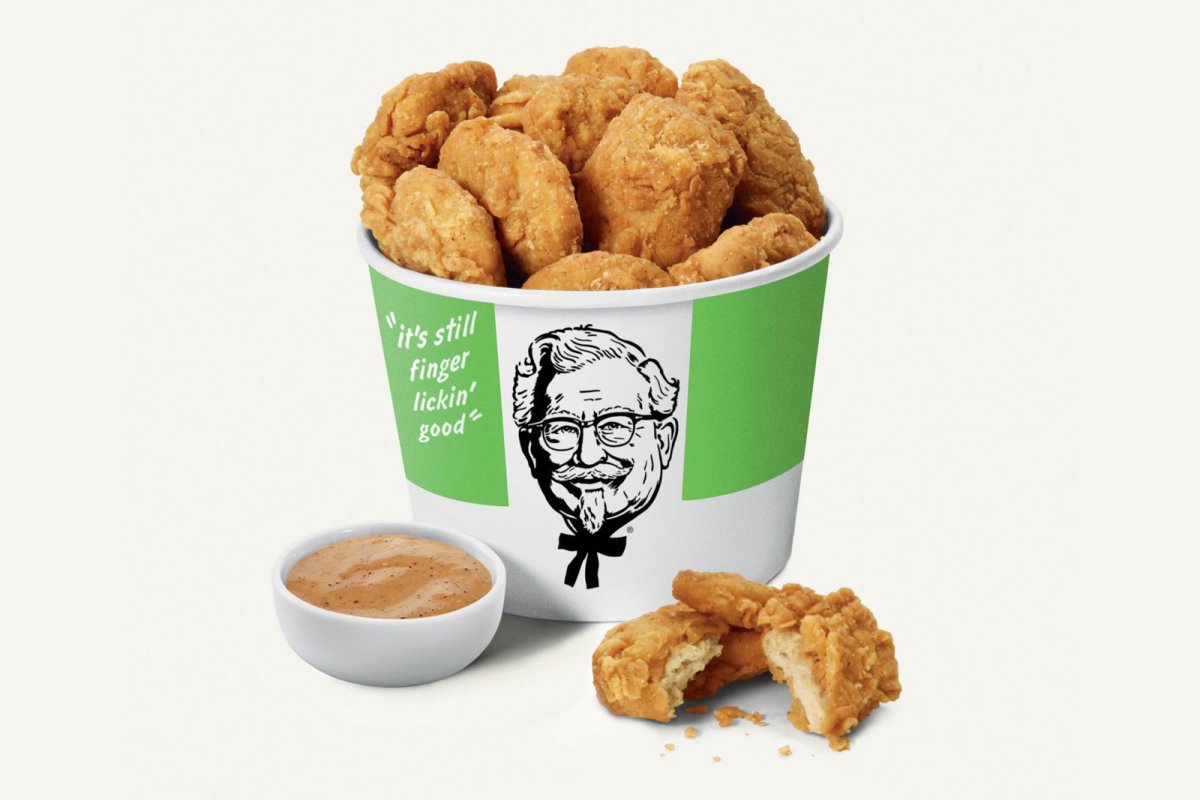
One of the best things about capitalism is that businesses will always find a way to co-opt seemingly positive social trends for the sake of making money off of easily duped people. The best example of this is the rising popularity of the new fake meat products like Impossible Meat and Beyond Meat.  Even more recently, KFC has jumped on the bandwagon by testing out the Beyond Chicken in their menu.

The marketing behind these products is that they're supposed to be better for your health because they're "plant-based". You seemingly get the protein you get in meat from plants while getting the same nutritional value as eating veggies.

The marketing material also implies that choosing a plant-based diet means that you're also being more environmentally friendly and you're reducing cruelty to animals. All this while keeping the same taste and texture of real meat. Amazing.  You now have a product that will allow you to feel morally superior to those ignorant meat-eaters without sacrificing the delightful feeling you get in your mouth when you're chewing on the flesh of dead animals.

Perfect product, right? Not so fast.

Healthier than meat?
For one this stuff isn't necessarily much healthier than meat. It's highly processed. To replicate the look, smell, texture and taste of ground beef and chicken with peas, soy and "plant-based ingredients", you'll definitely need to do some heavy industrial processing. You'll probably need less additives and processing to get a refrigerated piece of chopped up cow or chicken.

Also, Beyond Meat is mainly made of soy.  Soy has been shown to lower sperm count and decrease libido.  It has also been linked to mood swings and depression.  Prolonged soy consumption has also been connected to the growth of estrogen-dependent tumors found in breast cancer.


What about the calories and fat content?  Calorie-wise, a real burger patty has about the same amount of calories as a fake meat patty.  Sure, real meat will have more saturated fat than the fake patties, but new research in nutrition is showing that dietary fat isn't necessarily bad for your health.  In fact, it's actually necessary for your body.  The problem has been the sugar and carbs found in your burger bun and not the fat in the meat.

Better for the environment?
So what about the argument that avoiding meat is better for the environment and is less cruel to animals? Is that really true? That depends.  Sure, beef production which is used by most environmentalists as the worst case, does have a high carbon footprint.  Yes, the space required for cattle grazing usually leads to deforestation.

However, the amount of soy and peas used to make your plant-based burger requires mono-culture farming that's bad for the soil, requires a high use of pesticides, causes a lot of water pollution and has a high carbon footprint that contributes to climate change.  It also causes the loss of biodiversity by creating areas where only one type of plant can grow.

Coconut farming also promotes monoculture
At the same time the plant ingredients in that fake burger aren't sourced locally.  For example, the coconut oil required not only promotes monocultures, but also has to be shipped from Indonesia, the Philippines, and other tropical countries to North America.  That's a significant when it comes to fossil fuel use and carbon footprint.

Taste?
As for the taste, if you want something that tastes like meat and you have no allergies, why not just eat meat?  It always makes me laugh whenever I see fake meat products made for vegans and vegetarian. It's especially funny when the ones eating these products are the ones preaching and proselityzing about their diets. If their meatless diet is so superior, why are they still craving and trying to replicate the taste and texture of meat?

Looks like real meat, smells like real meat, somewhat tastes like it too... why not just eat a real burger?


Bottom Line:
The fake meat phenomenon is basically another sign of living in a privileged and easy society.  Historically, when you look at different societies around the world, humans will eat whatever they could get to survive. Even in hunter/gatherer societies, meat was considered a rare luxury because it's so difficult to hunt down and chase animals with non-firearm weapons.

As societies become wealthier and more industrialized, the consumption of meat increases. We're seeing that now in many developing countries the same way that we've seen that in the past in Europe and North America.  I suppose that when you reach peak wealth and privilege, the next step is to take your surplus of resources, go into a lab and create something that simulates the most historically coveted type of food.

Of course, I'm not saying that we should only eat meat.  There are many benefits to eating plants when it comes to dietary fiber, vitamins and other nutrients that can't be found in meat.  However, instead of trying to highly process these plant ingredients to look like meat, wouldn't it make more sense to just be the omnivores we evolved to be by eating your meat with vegetables?  I know it seems novel, but humans seem to have survived for millions of years eating that way.

Friday, 24 May 2019

True Body Positivity and Self-Love

The body positivity movement as we know it right now tells us that we shouldn't let society dictate how we should feel about our physical bodies.  According to this movement, we should accept all bodies, no matter the shape, size or appearance.


It's a nice thought.  There's nothing wrong with being happy with ourselves.  And yes, we shouldn't let magazines and social media determine what our bodies should look like.

HOWEVER...

The danger is that people who could be physically and mentally healthier will use this as an excuse.  It makes it easier for people who are unhealthy and obese to say that what their body looks like doesn't matter because they should be accepted while ignoring the negative effects of their bad diet and lack of exercise.

If we really were about loving our bodies, we would do our best to keep them functioning at optimal levels.  We should love our bodies so much that we want to keep our muscles relatively strong throughout our entire lives.  If we really loved our bodies we should want to be able to keep a certain level of mobility and flexibility in our joints and tendons as we get older.  Real body positivity and self-love means trying to prevent future diseases by paying attention to what we put in it.

Truly being "body-positive" and being honest about loving our bodies means that we shouldn't accept an unhealthy, physical status quo.  While our physical bodies will never be "perfect", we should be doing everything we can to keep that body as healthy as possible until we die.

Wednesday, 15 May 2019

Your Lunch is Cultural Appropriation

How your dietary choices can help stop world-wide oppression

Ask anyone in social justice warrior / activism circles. They'll tell you that the appropriation of an oppressed people's culture is one of the ways that the powerful have used to keep people down. 

The choices you make when it comes to clothes you wear, the hairstyle you choose, the music you decide to play or the physical activity you practice, can contribute to the oppression caused by cultural appropriation.

Some of the best examples of appropriation can be found in the food you eat. Here are some examples of seemingly common foods that you should steer clear of to avoid the sin of cultural appropriation.

Pasta with tomato sauce


This is probably one of the most iconic of Italian dishes. Except that if you really look at the ingredients, you'll see that this dish is really a combination of noodles taken from China with a sauce using tomatoes that are only native to South America.

So really, if you want to be oppression-free when eating any form of pasta with a tomato-based sauce, the only way would be to eat a dish made by a Chinese person assisted by a Colombian or a Peruvian saucier. Otherwise, you're just encouraging the continued cultural theft perpetrated by white Italians who have the gall to call this and other pasta variations as "authentic Italian food".

Banh Mi Sandwiches


These delicious Vietnamese sandwiches are seriously problematic. For one, many non-Vietnamese have been selling these with the wrong kind of bread (ciabatta instead of baguettes) and passing them off as "authentic".

But more problematically, the authentic Vietnamese sandwich makers have appropriated French bread. Now we can argue that it's not really cultural appropriation because the French were actually the colonial oppressors in Vietnam, Cambodia, Laos and the surrounding regions.  So you'd think that an oppressed people taking over a part of an oppressor's culture would be positive, right?

Think again.

The fact that the Vietnamese has adopted the French baguette is not positive at all. This is a sign of cultural self-hatred caused by colonialism.  The colonial influence has made Vietnamese chefs think that their local breads aren't good enough and they have to use a modified version of French bread to make their food better.

By buying and eating a banh mi sandwich, you are not only encouraging Vietnamese people's appropriation of French culture. Your purchase also helps Vietnamese people to proliferate their hatred of their own culture.

Poutine


Wait a minute, this is a dish made by white people in Canada. How can it be cultural appropriation for other white people to sell and eat this amazing combination of french fries, cheese curds and gravy?

Invented in 1950s rural Quebec (the popular consensus is that it's from Drummondville, though other towns will dispute it), the dish had a very working class origin. It was created by mixing ingredients that are easily found in a diner (fries and gravy) with a by-product of cheddar cheese production (cheese curds).

The problem is that for the longest time, French Canadian culture in Quebec has always been under the oppression of the rest of English-speaking Canada. The "weirdness" of poutine was actually mocked as being the example of why Quebec culture is supposedly inferior to that of the rest of Canada.

As the popularity of poutine has skyrocketed, many restaurants in Toronto and other large cities in English Canada have been profiting off the invention of French-speaking Quebec and passing it off as a Canadian dish.  Never mind that Quebec is part of Canada.  Quebec society considers its culture as distinct from the rest of Canada.  So buying poutine outside of Quebec or from a restaurant that isn't owned by French-speaking Quebecois is definitely problematic.  Let's not even talk about American restaurants starting to add poutine in their menus.

What makes it worse are the variations of poutine that have started popping up.  It started out with "Italian poutine" where tomato sauce is used instead of gravy.  I've already explained the problematic nature of tomato sauce above.  Now you're also seeing the additions of chicken tikka masala or feta and tzatziki sauce on poutine.  Some have even substituted the cheese curds with brie or other more expensive cheeses.  Other restaurants have put lobster on poutine.

The biggest offender is of course the famous "Au Pied de Cochon" restaurant in Montreal who puts foie gras in their poutine.  Yes, the chef and owner is a French-speaking Quebecois.  The issue is that while he technically is allowed to make and sell poutine, the chef has committed social class appropriation. He essentially gentrified poutine by making it "fancy" and pricing it beyond the means of the working class who invented the dish and intended to make it accessible for everyone.

General Tso's / General Tao Chicken


This staple of North American Chinese restaurants was actually invented by a Chinese chef who fled to Taiwan when Mao's Communist Party took over. The chef then brought it to the United States.  Seems harmless enough, right?

Not so fast.

Yes the creator of the dish was originally Chinese.  However, because he created that dish in Taiwan and then brought it to the USA, General Tso's chicken (or General Tao chicken in some places) is virtually unknown in China.  But the dish itself was and still is being passed off as "Chinese food" in North America, giving consumers the wrong impression of what food in China is actually like.

What's the big deal?  Taiwan is basically China, right?  Wrong!

The government of Taiwan (not to mention the people) will be quick to say that they are an independent state with their own distinct culture.  So in this case, calling General Tso's chicken a Chinese dish is indeed cultural appropriation by Taiwanese and of course North American restaurateurs.

So if you truly want to show respect to Chinese culture, you would do well to avoid this dish when going into a Chinese restaurant (which, of course should be Chinese-owned and operated).  If you do eat this, you're encouraging Taiwanese rebels who are both appropriating and profiting off authentic Chinese cuisine.