Showing posts with label activism. Show all posts

Wednesday, 13 November 2019

A Quick and Easy Guide to Displaying Your Virtue

Becoming a good person who contributes to society is difficult, as outlined in a previous post.  It requires a change in mindset, a change in attitudes and acting according to rules.  Making that change can also mean that you will face consequences from friends, family and even the authorities. There will always be a cost to being a "good person".  It's actually far easier to LOOK like someone who's virtuous without actually making the sacrifices.  So, in order to gain social brownie points, you'll need to be effective at signaling your virtue to both your digital and analog social circles.

Here are a few easy tips on how to do that.

1) Be Offended and Outraged


You have a lot of options here. You can be offended about jokes. You can be outraged at the lack of racial/gender/religious/sexual orientation/physical size/disability/dietary choice "representation" in films and TV shows. You can complain about public figures' comments, or lack thereof, on a given controversial topic that they have no expertise on.  You can complain about the insensitivity of Halloween costumes.

Of course, even if you're not part of the group that you believe is being victimized by the offensive piece of content, you shouldn't be shy to show how offended and outraged you are.  After all, if you're not part of that underprivileged group, you can still be an "ally" to that group.  You can use your "position of privilege" to help the cause.

You know, because people that are different from you have no agency at all and will always require your help.

2) Take to the Streets and Protest
Historically, protesting on the streets has been a great way to get governments to take action.  This worked in the past when trying to get a dictator to step down from power or to have specific laws changed.  It's eventually worked for people wanting political prisoners to be freed or for people wanting to get an occupying power out of their country.

Of course, there's a cost for those types of protestors. They historically have been targets of violence, unlawful imprisonment and other human rights violations.  Think about the Civil Rights movement in the US in the 1960s, the Arab Spring protests in the early 2010s, the Tiananmen Square protests in 1989, or more recently, the protests in Chile and Hong Kong as examples.


If you live in a free society and democracy in 2019, the types of causes similar to those mentioned above aren't found as easily.  Instead, you'll have to find ways to protest against problems and concepts like censorship of free speech, racism, police brutality, income inequality, sexism, anti-scientific thinking, climate change and human extinction.  It's not that these causes aren't worthy of protest. The problem is that these are complex, unspecific issues that require extremely complex solutions which can't be fixed by simply taking a walk.

For example, if you want to stop climate change caused by humans, you can try to get governments to commit to making investments in clean energy and reduce carbon emissions. To make that work, that means you need to create a mechanism to enforce their commitments.  And then those governments have to get trillion dollar industries to bend to their will.  Good luck fixing that with your march.

But hey, you did take to the streets for a cause.  You marched and blocked traffic to let people know that you're fighting against a concept or something that requires a multiple levels of complex thought to to reach a solution.  You didn't really affect change and put yourself in any danger of violent reprisals. Your protesting just made it LOOK like you did something. That should be enough. You just want to seem like you're "fighting" without actually incurring any real cost to your well-being.

3) "Think of the Children"
Saying that you're thinking of children and future generations as a reason for your position is great way to show your virtue.  This is true whether you're part of a highly religious group wanting to censor the latest blasphemous, popular film or whether you're part of an environmental activism group trying to fight climate change.


Even if you don't have kids or you don't really care about kids, you'll sound like someone who cares. All you need to do is to position your argument as being based on "protecting children" or ensuring that you are fighting to "leave a better world for the next generation".  This is a very easy way to demonstrate that you are unselfish and better than other people who can only think of theirs and their own families' current well-being.

It is true that children can be vulnerable to adults who can directly exploit them. This is not what I'm talking about.  To actually help expose and help prosecute a pedophile or a child pornography ring requires time, effort and could potentially put yourself in harm's way.  Studying and getting a job as a social worker who tries to take kids away from their abusive home is way more difficult than simply clicking "like" and "share" on a social media sob story.

It's much easier to say that you're thinking of the children when you petition school boards to censor what kind of books teachers should be teaching or when you demand that certain types of words need to be "policed" in schools.  That's an easier task that will make you seem like a good person who wants to help children.


4) Document everything on Social Media


Of course, you must make sure your efforts are visible to the world. If there are no pics (or videos), then it didn't happen.  This is where social media comes in.

Now I'll admit that in places where oppressive governments censor the press and the flow of information, social media has been useful at disseminating news of civic unrest.  The Arab Spring wouldn't have played out the way it did if it wasn't for Twitter, for example.

However, for those living in free, Western democracies, you can also use this tactic to make your actions seem more virtuous than they actually are.

Post selfies of you and your besties participating in protests to show that "you took part in this historic moment." That way, when someone else did the work of getting elected, changing laws and negotiating with multiple stakeholders to effect real-life political and social change, you can point to your Instagram pic and take credit because you skipped out on a job you don't like that day to take a walk.

Don't be shy to post on public figures' social media accounts to call them out on their non-woke behaviours and opinions. You can "call them out" if they're not living up to the arbitrary moral standards of the day.

Even if these public figures are too busy doing their jobs and have outsourced their social media to their marketing and PR teams, it's ok. You'll get more views on your posts by tagging these people than just posting something yourself. And that means more people can potentially see how morally superior you are.

Final Thoughts
It's very difficult to actually be a good person.  In fact, it's almost impossible if you consider all the unintended consequences of your choices and actions.  Creating real social change is incredibly difficult. It's much easier to make people THINK that you are virtuous.  It's easier to adopt a strong opinion on a subject and determine that one side is perfectly good and the other is evidently evil without examining the nuances.

Whether it's allying yourself with an "oppressed" group or using future generations as the "beneficiaries" of your actions, the idea is to make sure that the most amount of people see that you're being morally superior.  With that, you can reap the benefits of being a good person without having to face the difficult consequences of choosing morally acceptable behaviour.

Wednesday, 9 October 2019

Plant-Based Fake Meat is a Load of Bull

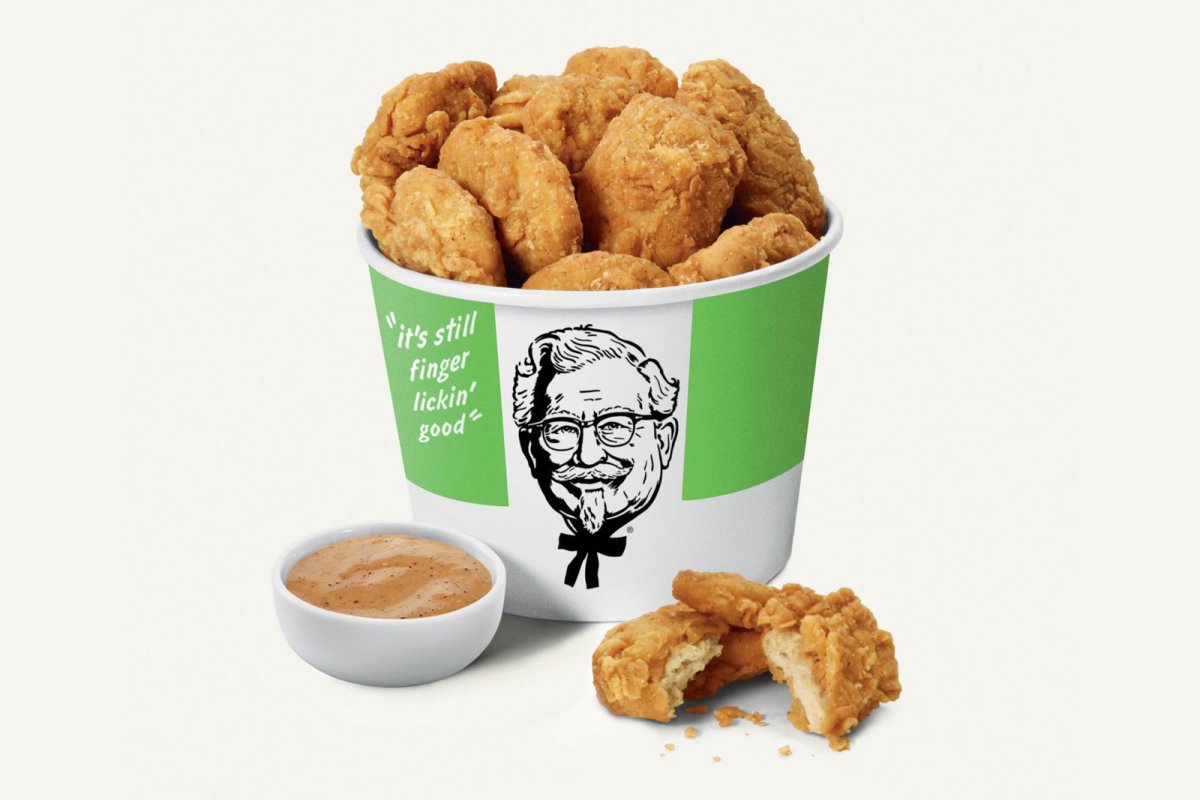
One of the best things about capitalism is that businesses will always find a way to co-opt seemingly positive social trends for the sake of making money off of easily duped people. The best example of this is the rising popularity of the new fake meat products like Impossible Meat and Beyond Meat.  Even more recently, KFC has jumped on the bandwagon by testing out the Beyond Chicken in their menu.

The marketing behind these products is that they're supposed to be better for your health because they're "plant-based". You seemingly get the protein you get in meat from plants while getting the same nutritional value as eating veggies.

The marketing material also implies that choosing a plant-based diet means that you're also being more environmentally friendly and you're reducing cruelty to animals. All this while keeping the same taste and texture of real meat. Amazing.  You now have a product that will allow you to feel morally superior to those ignorant meat-eaters without sacrificing the delightful feeling you get in your mouth when you're chewing on the flesh of dead animals.

Perfect product, right? Not so fast.

Healthier than meat?
For one this stuff isn't necessarily much healthier than meat. It's highly processed. To replicate the look, smell, texture and taste of ground beef and chicken with peas, soy and "plant-based ingredients", you'll definitely need to do some heavy industrial processing. You'll probably need less additives and processing to get a refrigerated piece of chopped up cow or chicken.

Also, Beyond Meat is mainly made of soy.  Soy has been shown to lower sperm count and decrease libido.  It has also been linked to mood swings and depression.  Prolonged soy consumption has also been connected to the growth of estrogen-dependent tumors found in breast cancer.


What about the calories and fat content?  Calorie-wise, a real burger patty has about the same amount of calories as a fake meat patty.  Sure, real meat will have more saturated fat than the fake patties, but new research in nutrition is showing that dietary fat isn't necessarily bad for your health.  In fact, it's actually necessary for your body.  The problem has been the sugar and carbs found in your burger bun and not the fat in the meat.

Better for the environment?
So what about the argument that avoiding meat is better for the environment and is less cruel to animals? Is that really true? That depends.  Sure, beef production which is used by most environmentalists as the worst case, does have a high carbon footprint.  Yes, the space required for cattle grazing usually leads to deforestation.

However, the amount of soy and peas used to make your plant-based burger requires mono-culture farming that's bad for the soil, requires a high use of pesticides, causes a lot of water pollution and has a high carbon footprint that contributes to climate change.  It also causes the loss of biodiversity by creating areas where only one type of plant can grow.

Coconut farming also promotes monoculture
At the same time the plant ingredients in that fake burger aren't sourced locally.  For example, the coconut oil required not only promotes monocultures, but also has to be shipped from Indonesia, the Philippines, and other tropical countries to North America.  That's a significant when it comes to fossil fuel use and carbon footprint.

Taste?
As for the taste, if you want something that tastes like meat and you have no allergies, why not just eat meat?  It always makes me laugh whenever I see fake meat products made for vegans and vegetarian. It's especially funny when the ones eating these products are the ones preaching and proselityzing about their diets. If their meatless diet is so superior, why are they still craving and trying to replicate the taste and texture of meat?

Looks like real meat, smells like real meat, somewhat tastes like it too... why not just eat a real burger?


Bottom Line:
The fake meat phenomenon is basically another sign of living in a privileged and easy society.  Historically, when you look at different societies around the world, humans will eat whatever they could get to survive. Even in hunter/gatherer societies, meat was considered a rare luxury because it's so difficult to hunt down and chase animals with non-firearm weapons.

As societies become wealthier and more industrialized, the consumption of meat increases. We're seeing that now in many developing countries the same way that we've seen that in the past in Europe and North America.  I suppose that when you reach peak wealth and privilege, the next step is to take your surplus of resources, go into a lab and create something that simulates the most historically coveted type of food.

Of course, I'm not saying that we should only eat meat.  There are many benefits to eating plants when it comes to dietary fiber, vitamins and other nutrients that can't be found in meat.  However, instead of trying to highly process these plant ingredients to look like meat, wouldn't it make more sense to just be the omnivores we evolved to be by eating your meat with vegetables?  I know it seems novel, but humans seem to have survived for millions of years eating that way.

Wednesday, 25 September 2019

Banning Ring Card Girls is Anti-Feminist and Prevents Women's Empowerment


Anyone who watches professional combat sports will notice that there are always scantily-clad women carrying large cards around a ring or a cage to remind viewers what round in the fight we're in.


Apparently, some very well-meaning, though misguided feminist activists and politicians in Australia have decided that enough is enough.  They want to end the objectification and exploitation of women by banning ring card girls (a.k.a. "round progress managers") at a championship boxing match this past August.  They are now even petitioning the UFC not to have the iconic Octagon girls in between rounds in the upcoming event this coming October.

Are current feminists all of a sudden uncomfortable at the thought of women showing their bodies and getting paid handsomely for it if they want to? I was under the impression that a way to empower women is by giving them choices in the types of work they do.  If a woman wants to show off as much or as little of her body in public as she wants, nobody should be able to tell her otherwise
 
I can see where the "objectification" argument might come from, but as for "exploitation", I tend to disagree. None of these politicians and activists actually asked the women doing the ring girl jobs if they've ever felt exploited or forced to do this.

By banning these jobs, these politicians and activists are effectively taking away these women's right to make a living legally. And yes, I do call this work for the simple reason that it takes commitment and discipline when it comes to exercise and diet to maintain the physical condition that these women have.  Also, if you do any research, you'll learn that many of these women have actually used the platform of combat sports as a launching point for extremely lucrative partnerships, sponsorships and careers in modeling, art, broadcasting, podcasting, and other fields.

Maybe it's a question of representation.  Would there be as many complaints and bans if more "plus-sized" women were represented in the job the same way that we now have an increasing amount of "plus-sized" models?  What if we had more women over the age of 45 doing the job?  Or maybe more women in wheelchairs?

Would there also be as many complaints if in addition to having ring card girls during men's fights, we had ring card guys during women's fights?  The all-women MMA promotion Invicta FC debuted Canadian pro-fighter Elias Theodoru as their ring card boy last year.  He hasn't done it since, but I think it would be more interesting to see dudes doing the same type of job in other organizations.

How many feminists and activists would complain if pro-fighter Elias Theodoru continued working as a Ring Card boy on the side?
 

Personally, I've always thought that it was a bit weird to see ring card girls in between rounds of a women's MMA championship fight.  So it would make more sense to have more ring card guys reminding us what round it is.  It would be somewhat sexist and regressive to consider this job as exclusively "women's work" after all.

The point I'm trying to make is this.  The Australian bans are simply an attack on soft targets that make it look like they're doing something when they're really just trying to show off how much more virtuous they are than the rest of us.  If politicians and feminists were really looking to empower women, stop exploitation and objectification, they would be aiming their outrage at real issues of violence against women and lack of education for girls in other countries outside of the Western world.

Wednesday, 18 September 2019

Professional Combat Sports: The Best at Beating the Gender Pay Gap

Professional sports have always been the target of feminist activists. Whether it's a question of equal pay, proper representation, glorification of violence and objectification of women.  Most "woke" people will probably say that combat sports are the biggest offenders.

I would argue the opposite.  Professional combat sports are probably the only professional sport that promotes meritocratic gender equality for both male and female athletes.

The main complaint many activists have with professional and international sports leagues is that female athletes aren't being paid as well as the male athletes (think FIFA, professional tennis, NBA vs. WNBA, etc).  Putting aside the fact that male sports leagues have larger audiences than female sports leagues, thus creating more revenue, there is a question of allowing women's sports the same opportunity to earn as much as men's sports.

Mixed Martial Arts promotions like the UFC, Bellator, ONE Championship and PFL have actually solved this problem by having men and women in the same fight cards (not fighting each other of course).  In their older pay-per-view business model, the main event fighters who get paid the most are determined by who can put the most butts in seats and have the most people clicking the "Buy" button on their remote controls.

At one point in time, that person in the UFC was Ronda Rousey.  In fact, her fight with Holly Holm still holds the highest record in attendance at 56,214 tickets sold.  Her pay had nothing do with her gender.  She didn't protest to her employer and make hashtags about getting equal pay as the men. Instead, she used her dominant fighting ability to draw a paying audience and made millions of dollars for herself.

The UFC's record for highest-attended event headlined by two amazing badass women: Rousey vs. Holm

When Rousey retired from the sport, the organization had trouble selling the same amount of pay-per-view fight cards with any other headline fight, male or female.  It wasn't until Conor McGregor showed up on the UFC scene that we've seen similar numbers.


The Professional Fighters League (PFL) promotion actually took this "equal pay for equal work" ideal to another level.  Instead of simply using drawing power, this league actually created a regular season that gives fighters a chance to win playoff spots similar to the NFL, the NBA or the NHL.  They are then seeded into a playoff-style tournament for each weight class, where the winners of each weight is crowned that season's champion.  Every champion from each weight class (both men and women) each win $1 million.

Of course, mid-card and under-card fighters don't get paid as well as the main-eventers, but then again, they are all pretty equally underpaid.


Whether it's by equalizing main-event and championship fighters' pay or by counting the number of tickets sold, the bottom line is the same.  Whether you're a man or a woman, your earning potential in combat sports won't be determined by your gender.  That's better than any other professional sport when it comes to the so-called gender pay gap.

Thursday, 20 June 2019

Who Really Should be Checking Their Privilege?


There's been a lot of talk in North America, the EU and much of Western society about privilege.  How the privileged have too long been in positions of power.  There's talk that people with privilege should stop talking and let the less privileged have their time.

Fair enough.

But who exactly has "privilege" when taking the entire world in context?  Let's look at a few examples:

If you live in a place where you can poop and pee in a shiny bowl indoors and you won't have to worry about it coming back up or running through the streets and causing massive cholera outbreaks, then you're privileged.

If you have a temperature-controlled waterfall (a.k.a. shower) inside your home that you can use on a daily basis to clean yourself with, then you're privileged.

If you can pull out a small electronic device in your pocket and push some buttons to access the entirety of human knowledge in seconds, then you're privileged.

If you can get all the food you want brought to your home without having to set foot outside and interact with a human being, then you're privileged.

If you're able to read this blog on any device that would have been considered "magical" by people from 100 years ago, then you're privileged.

If you live in a society where the illnesses that kill you are mainly due to an over-abundance of high-calorie foods, then you're privileged.

If you live in a society where you can proselytize that YOUR dietary choices are morally better than others', then you're privileged.

If you live in a country where you can protest and criticize your government in any non-violent way without fearing reprisals against you, your friends and your family, then you're privileged.

If you live in a country where you can openly express your membership in the LGBTQ+ community without having to worry about being killed and thrown off a roof, then you're privileged.

If you can be a student in an institute of higher learning and can loudly complain about the cultural insensitivity of Halloween costumes worn by your fellow students, then you're privileged.

If you can be a teacher in an institution of higher learning and can present your pseudo-scientific ideologies as legitimate academic research, then you're privileged.

If your definitions of "violence" and "victimization" include terms like micro-aggression and misgendering pronouns, then you're privileged.

If you can buy and get a Che Guevara t-shirt delivered to you from Amazon to show how much you care about social injustice and income inequality, then you're privileged.

If you have a job that pays you at least $34 000 US dollars per year, then you are part of the privileged 1%.

Of course, where we live isn't perfect even if you have most of the things mentioned above.  However, the next time you start complaining about how you want to stop the oppression caused by the privileged in society, take a few seconds to think about who the "privileged oppressors" really are.

Wednesday, 15 May 2019

Your Lunch is Cultural Appropriation

How your dietary choices can help stop world-wide oppression

Ask anyone in social justice warrior / activism circles. They'll tell you that the appropriation of an oppressed people's culture is one of the ways that the powerful have used to keep people down. 

The choices you make when it comes to clothes you wear, the hairstyle you choose, the music you decide to play or the physical activity you practice, can contribute to the oppression caused by cultural appropriation.

Some of the best examples of appropriation can be found in the food you eat. Here are some examples of seemingly common foods that you should steer clear of to avoid the sin of cultural appropriation.

Pasta with tomato sauce


This is probably one of the most iconic of Italian dishes. Except that if you really look at the ingredients, you'll see that this dish is really a combination of noodles taken from China with a sauce using tomatoes that are only native to South America.

So really, if you want to be oppression-free when eating any form of pasta with a tomato-based sauce, the only way would be to eat a dish made by a Chinese person assisted by a Colombian or a Peruvian saucier. Otherwise, you're just encouraging the continued cultural theft perpetrated by white Italians who have the gall to call this and other pasta variations as "authentic Italian food".

Banh Mi Sandwiches


These delicious Vietnamese sandwiches are seriously problematic. For one, many non-Vietnamese have been selling these with the wrong kind of bread (ciabatta instead of baguettes) and passing them off as "authentic".

But more problematically, the authentic Vietnamese sandwich makers have appropriated French bread. Now we can argue that it's not really cultural appropriation because the French were actually the colonial oppressors in Vietnam, Cambodia, Laos and the surrounding regions.  So you'd think that an oppressed people taking over a part of an oppressor's culture would be positive, right?

Think again.

The fact that the Vietnamese has adopted the French baguette is not positive at all. This is a sign of cultural self-hatred caused by colonialism.  The colonial influence has made Vietnamese chefs think that their local breads aren't good enough and they have to use a modified version of French bread to make their food better.

By buying and eating a banh mi sandwich, you are not only encouraging Vietnamese people's appropriation of French culture. Your purchase also helps Vietnamese people to proliferate their hatred of their own culture.

Poutine


Wait a minute, this is a dish made by white people in Canada. How can it be cultural appropriation for other white people to sell and eat this amazing combination of french fries, cheese curds and gravy?

Invented in 1950s rural Quebec (the popular consensus is that it's from Drummondville, though other towns will dispute it), the dish had a very working class origin. It was created by mixing ingredients that are easily found in a diner (fries and gravy) with a by-product of cheddar cheese production (cheese curds).

The problem is that for the longest time, French Canadian culture in Quebec has always been under the oppression of the rest of English-speaking Canada. The "weirdness" of poutine was actually mocked as being the example of why Quebec culture is supposedly inferior to that of the rest of Canada.

As the popularity of poutine has skyrocketed, many restaurants in Toronto and other large cities in English Canada have been profiting off the invention of French-speaking Quebec and passing it off as a Canadian dish.  Never mind that Quebec is part of Canada.  Quebec society considers its culture as distinct from the rest of Canada.  So buying poutine outside of Quebec or from a restaurant that isn't owned by French-speaking Quebecois is definitely problematic.  Let's not even talk about American restaurants starting to add poutine in their menus.

What makes it worse are the variations of poutine that have started popping up.  It started out with "Italian poutine" where tomato sauce is used instead of gravy.  I've already explained the problematic nature of tomato sauce above.  Now you're also seeing the additions of chicken tikka masala or feta and tzatziki sauce on poutine.  Some have even substituted the cheese curds with brie or other more expensive cheeses.  Other restaurants have put lobster on poutine.

The biggest offender is of course the famous "Au Pied de Cochon" restaurant in Montreal who puts foie gras in their poutine.  Yes, the chef and owner is a French-speaking Quebecois.  The issue is that while he technically is allowed to make and sell poutine, the chef has committed social class appropriation. He essentially gentrified poutine by making it "fancy" and pricing it beyond the means of the working class who invented the dish and intended to make it accessible for everyone.

General Tso's / General Tao Chicken


This staple of North American Chinese restaurants was actually invented by a Chinese chef who fled to Taiwan when Mao's Communist Party took over. The chef then brought it to the United States.  Seems harmless enough, right?

Not so fast.

Yes the creator of the dish was originally Chinese.  However, because he created that dish in Taiwan and then brought it to the USA, General Tso's chicken (or General Tao chicken in some places) is virtually unknown in China.  But the dish itself was and still is being passed off as "Chinese food" in North America, giving consumers the wrong impression of what food in China is actually like.

What's the big deal?  Taiwan is basically China, right?  Wrong!

The government of Taiwan (not to mention the people) will be quick to say that they are an independent state with their own distinct culture.  So in this case, calling General Tso's chicken a Chinese dish is indeed cultural appropriation by Taiwanese and of course North American restaurateurs.

So if you truly want to show respect to Chinese culture, you would do well to avoid this dish when going into a Chinese restaurant (which, of course should be Chinese-owned and operated).  If you do eat this, you're encouraging Taiwanese rebels who are both appropriating and profiting off authentic Chinese cuisine.